
This is how agencies scale video production without scaling the team: load a client's brand, describe the campaign, and Vivideo's AI video generator produces on-brand ads, social clips and explainers for every account — across 30+ models, in minutes. Clients want more video across more channels, but hiring editors for every account kills margin. An AI video maker turns video into a repeatable, high-margin service you can deliver at volume across every client.
Why AI video transforms agency margin
The videos agencies deliver most
The deliverables clients actually buy — each a one-click, brand-kit-aware preset in Vivideo.
Social ad batch
Ten, fifty or a hundred variants of one concept — different hooks, edits and aspect ratios — built to A/B test and outrun creative fatigue without re-shooting a thing.
UGC-style spot
Native-feeling, creator-look ads with AI avatars and cloned voices — the format paid social rewards — without sourcing a roster or paying per-deliverable usage fees.
Brand film
A polished hero story for the homepage and the pitch deck — music-scored, on-palette, narrated — that used to mean a shoot day and a week in the edit suite.
Product & explainer
Turn a product shot or feature list into a clean demo or explainer that sells the thing — the workhorse asset for e-commerce and SaaS clients alike.
Always-on social
A steady drip of weekly reels, tips and trend cuts that keep a client's feed alive between campaigns — the retainer work that quietly funds the agency.
White-label client kit
Lock each client's logo, fonts, colors and voice into a reusable brand kit so every export ships on-brand, under your agency's name, with zero manual styling.
How agencies make client videos with Vivideo
Load the client brand kit
Set logo, fonts, colors and a cloned voice once per client — every future render inherits it automatically, white-labeled as yours.
Drop in the brief & assets
Paste the brief, upload product shots or a script, and pick the format — ad batch, UGC spot, brand film or always-on cut.
Vivideo produces the batch
Scenes, motion, captions, music and dozens of variants are assembled across 30+ models — no edit suite, no freelancer queue.
Review, approve, ship everywhere
Send the draft for client sign-off, then export every aspect ratio for every channel from one render.
Deliver to every channel's spec — from one render
Vivideo renders each cut to the exact format every platform and placement rewards.

A Client Video Engine That Scales
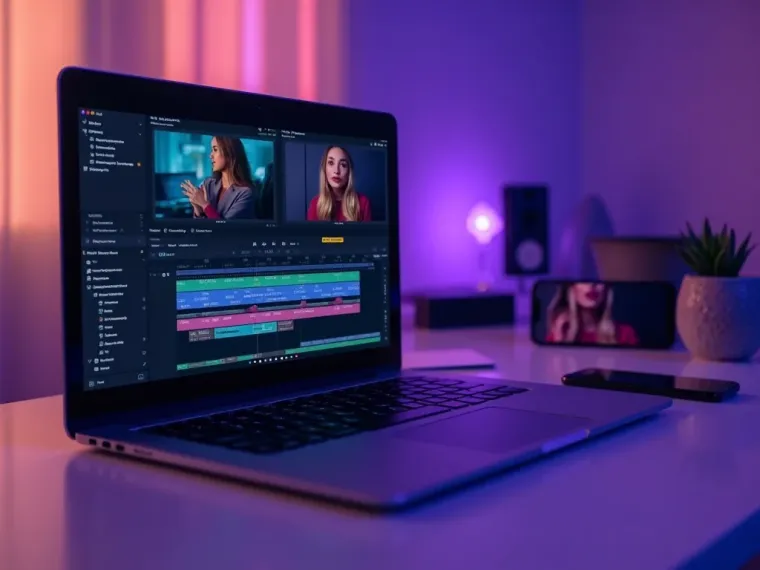
Vivideo's AI video generator produces on-brand ads, social clips and explainers for every client from a brief — and the same screen lets you edit them. Deliver client video at volume without hiring an editor per account.
One operator ships a week of on-brand video for a dozen accounts.
A Brand Kit Per Client
Each client has a logo, palette, fonts and voice, and consistency is non-negotiable. Store a brand kit per account and every render comes out on-brand — the answer to "how do we scale video without losing each client's look."
Consistency across a dozen brands, from a single operator.
Creative Volume That Renews Retainers
Performance accounts need fresh ad variants and content accounts need a steady feed. Generate the volume in-house, test more, refresh before fatigue, and localize winners into 30 languages — the deliverable that keeps clients renewing.
More testing, fresher creative, more markets — without more headcount.
Everything the Agency Video Engine Includes
One place to produce, brand-per-client, test and localize video across every account.
Who Uses AI Video for Agencies?
Every agency delivering video at scale:
One Free Studio Behind Every Tool
Winning feeds and ad accounts are a volume game — this studio is how one person posts like a team.
More Ways to Deliver Video at Scale










See the Agency Video Engine in Action
Watch a brief become on-brand client ads — then make your first client video free on Vivideo.
AI video for agencies, explained
Agencies are caught between what clients want — more video, on more channels, faster — and what it costs to deliver: editors, motion designers and shoots that don't scale with margin. AI video breaks that trade-off. A client brief becomes finished, on-brand video in minutes, which turns video from a costly bottleneck into a repeatable, high-margin service you can sell and deliver across every account.
The craft is managing many brands at volume. Each client has a logo, palette, fonts and voice, and consistency is non-negotiable. Vivideo stores per-client brand kits and applies them to every render, so a single operator can produce a week of on-brand video for a dozen accounts — ads, social cuts, explainers, testimonials — each exported at the right ratio for its channel.
Creative volume is the deliverable clients pay for, and it's where an AI video generator earns its keep for an agency. Performance accounts need a constant stream of fresh ad variants; content accounts need a steady feed. Generating in-house means you test more, refresh creative before fatigue, and localize winners into 30 languages — the volume that keeps retainers renewing.
Put together, it's a way to productize video and expand accounts without expanding headcount. Not a bespoke edit per asset, but a scalable engine that delivers on-brand video for every client at the pace they demand — with human strategy and review on top. That leverage is what protects margin and grows the book.
Agency AI-video FAQ
How does an agency scale video without hiring more editors?
Use the AI video generator: load each client's brand kit and produce ads, social clips and explainers from a brief automatically across 30+ models. One operator delivers a week of on-brand video for many accounts, no proportional headcount.
Is it free to try?
Yes — you can make agency videos free with daily generations, no credit card and no download. Watermark-free, multi-brand exports and higher limits come with an affordable plan.
Can I manage multiple client brands?
Yes — store a brand kit per client (logo, colors, fonts, voice) and every render for that account comes out on-brand, so consistency scales across the book.
What kinds of client videos can I deliver?
Performance ad variants, organic social content, explainers, product demos, testimonials and promos — each sized for the client's channels, all from one brief.
Can I produce enough ad variants for testing?
Yes — generate ten hook or offer variations per client per brief, so performance accounts always have fresh creative and CPAs stay controlled.
Can I localize campaigns for international clients?
Yes — turn one client video into 30 languages with AI translation and dubbing, so global accounts scale without re-shooting.
Does this replace my creative team?
It replaces the slow, low-margin production work. Your team does strategy, direction and review; the engine handles volume — the combination is what protects margin.
Can I white-label the output?
The output carries your client's brand, not Vivideo's — watermark-free on a paid plan — so every deliverable is client-ready.