The Vivideo AI video API lets you generate video programmatically from one endpoint. Instead of integrating Sora, Veo, Kling and a dozen other providers separately, you call one REST API and pick the model per request — text-to-video, image-to-video, avatars, voices and brand kits included. One integration replaces many, with usage-based pricing and no per-provider contracts.
Trusted by individuals at











How the AI video API works
Get an API key
Create a key in your Vivideo account and call the REST API from any language or stack — the full quickstart lives at developers.vivideo.ai.
Send a request
POST a prompt (or an image) and pick a model. The same schema covers text-to-video, image-to-video, avatars and more.
Poll or webhook
Generation is async — poll the status endpoint or register an HMAC-signed webhook and get notified when the video is ready.
Get the video URL
The API returns a hosted video URL, ready to download, store or serve to your users.
What the AI video API gives you
One endpoint, every model, every generation type.
| Capability | What it does |
|---|---|
| 30+ models, one API | Call Sora, Veo, Kling and more from a single endpoint — switch models with a parameter. |
| Every generation type | Text-to-video, image-to-video, avatars, voices and brand kits in one schema. |
| Async with webhooks | Fire a request and get a webhook when it's done — built for production workloads. |
| Usage-based pricing | Pay per generation, no per-provider contracts or minimums. |
| SDK, MCP & CLI | An open-source TypeScript SDK, MCP server and CLI on npm and GitHub — reach the same API from code, agents or the terminal. |
Developer resources
Docs, spec, SDK and source — everything you need to ship.
API quickstart
Auth, first request and first video in minutes.
Interactive API reference
Every endpoint, schema and error code, with runnable examples.
OpenAPI specification
Machine-readable spec — generate a client in any language.
@vivideo/core on npm
Typed TypeScript SDK with rate limiting, retries and idempotency built in.
Open source on GitHub
MIT-licensed toolchain — SDK, MCP server, CLI and agent skills.
Get an API key
Create and manage keys in your Vivideo account settings.
How the AI video API works, explained
Building AI video into a product usually means integrating a handful of providers — one for text-to-video, another for avatars, another for voices — each with its own API, auth and billing. The Vivideo AI video API replaces all of that with a single REST endpoint: you send a prompt or an image, pick a model with a parameter, and get a video back. One integration covers 30+ models and every generation type.
That model breadth is the point. Because Sora, Veo, Kling, Hailuo and more sit behind one API, you can route each request by cost, speed or style without touching your integration — fall back to a cheaper model under load, or switch to a higher-quality one for hero content, all with a parameter change.
It's built for real workloads. Generation is async: you fire a request and get a webhook (or poll) when the video is ready, and the API returns a hosted URL you can serve or store. Text-to-video, image-to-video, avatars, voices and brand kits all share one schema, so adding a capability is a parameter, not a new integration.
And you reach it however you like — a REST API for code, an open-source TypeScript SDK (@vivideo/core), an MCP server so AI agents can generate video as a tool, and a CLI for the terminal. The docs, quickstart and OpenAPI spec live at developers.vivideo.ai, and the whole toolchain is MIT-licensed on GitHub and npm. Usage-based pricing means you pay per generation across every model, with no per-provider contracts.
AI video API — FAQ
What is the AI video API?
It's a REST API for generating video programmatically. One endpoint gives you 30+ models — Sora, Veo, Kling and more — plus image-to-video, avatars, voices and dubbing, so you integrate once instead of per provider.
Which models does the video generation API support?
30+ — including Sora, Veo, Kling, Hailuo, Vidu and PixVerse. You pick the model per request with a parameter, so you can route by cost, speed or style.
Is it a text-to-video API and image-to-video API?
Both, plus more — the same schema covers text-to-video, image-to-video, avatar videos, AI voices and brand kits, so one integration handles every generation type.
How is generation returned?
Asynchronously — send a request, then poll the status endpoint or receive a webhook when the video is ready, and the API returns a hosted video URL.
How is the API priced?
Usage-based — you pay per generation, with no per-provider contracts or minimums. One bill covers every model.
What languages and stacks work?
Any — it's a standard REST API with an OpenAPI spec, plus an open-source TypeScript SDK (@vivideo/core on npm), an MCP server for AI agents and a CLI, so you can call it from code, an agent or the terminal.
Can I use it in production?
Yes — async generation, webhooks and hosted output URLs are built for production video workloads at scale.
Where are the API docs?
At developers.vivideo.ai — quickstart, authentication, every endpoint, webhooks, error handling and the OpenAPI spec, plus guides for the MCP server, CLI and agent skills.
One API, 30+ Video Models
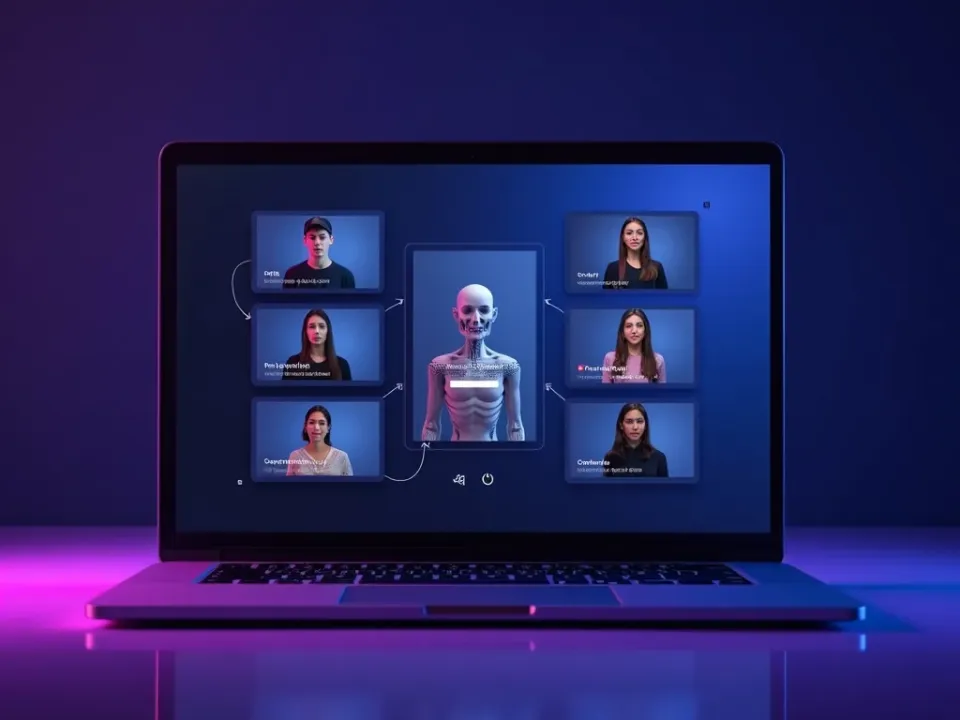
Instead of integrating Sora, Veo, Kling and a dozen providers separately, call one REST endpoint and pick the model per request. The AI video API replaces many integrations with one.
Route by cost, speed or style with a parameter — no re-integration.
Every Generation Type, One Schema
Text-to-video, image-to-video, avatars, voices and brand kits all share one schema — the answer to "how do I add AI video to my product without integrating five vendors."
Add a capability with a parameter, not a new integration.

Built for Production
Async generation, webhooks and hosted output URLs handle real workloads at scale, with usage-based pricing and no per-provider contracts. Reach it from code, an MCP agent or the CLI.
Fire a request, get a webhook, serve the video — at scale.
Everything the AI Video API Includes
One endpoint for every model and every generation type.

Who Uses the AI Video API?
Builders shipping video in products:




One Free Studio Behind Every Tool
Each utility here is a doorway into the full Vivideo studio — create, edit and localize video in the same place.

Explore More Developer Tools







See the AI Video API in Action
Watch one request generate a video across models — then build with the API on Vivideo.
